
Copyright 2024 ORICAL LLC - Partner - Florio Leahy LLP (Affiliated Law Firm, Attorney Advertising)
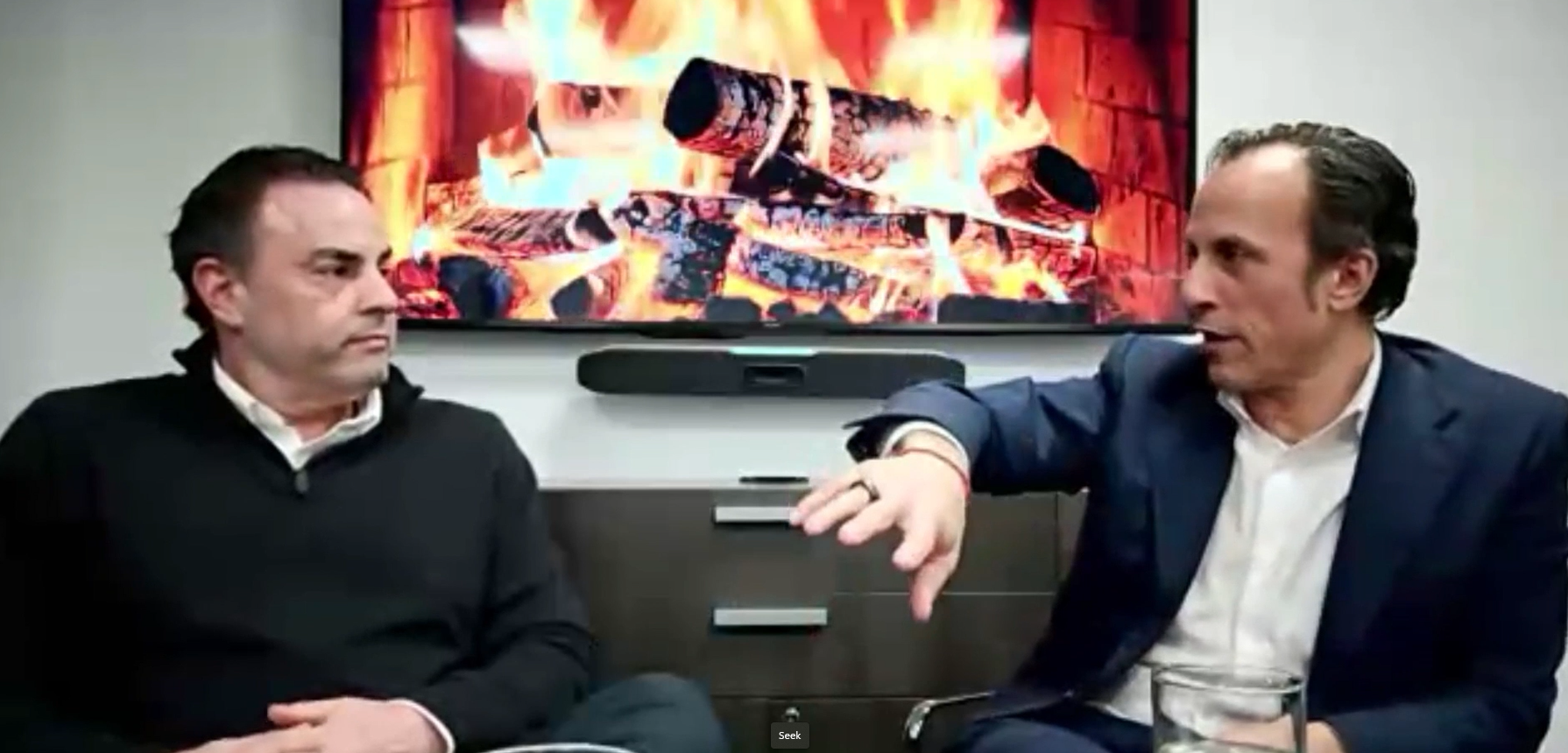
Orical Fireside Chat Series: A Conversation with Greg Lippmann on Conviction, Markets, and the Trade That Defined a Generation
Date & Time
Location
Duration
Orical’s latest Fireside Chat welcomed Greg Lippmann, founder of LibraMax Capital and one of the central figures in Michael Lewis’s The Big Short. Known for his role in identifying and executing one of the most consequential trades leading up to the Global Financial Crisis, Lippmann offered a candid and highly practical discussion on markets, risk, and decision-making under pressure. The conversation moved well beyond the mythology of 2008, focusing instead on the mindset, discipline, and intellectual independence required to navigate complex credit markets.
Lippmann’s early career story set the tone: less a tale of instant success, more a study in persistence and positioning. Starting in a middle-office role after graduating into a difficult job market, he emphasized the importance of building a reputation through consistent execution, making sure, as he put it, that every day someone walked away thinking he was either smart, hardworking, or both. That reputation ultimately opened the door to the trading desk and shaped a career defined by differentiated thinking rather than conventional progression.
The discussion then turned to the now-famous subprime trade, but with a refreshingly analytical lens. Lippmann described the opportunity not as a macro “call,” but as a fundamentally asymmetric trade. Once credit default swaps enabled shorting subprime exposure in 2005, he approached the market as a probabilistic exercise: limited downside over a defined time horizon versus outsized upside if structural weaknesses played out. The core insight was less about predicting timing and more about recognizing inevitability, an approach that resonates strongly with today’s focus on risk-adjusted return frameworks.
What stood out most was not the thesis itself, but the resistance it faced. Internally and externally, skepticism was persistent, even as the data increasingly supported his view. Lippmann described being questioned, challenged, and at times openly dismissed, particularly as the trade initially moved against him. His response was not to retreat, but to refine and communicate the thesis, ultimately pitching the idea to hundreds of investors. That process both strengthened his conviction and validated the underlying analysis, with a meaningful subset of sophisticated hedge funds ultimately participating.
For a professional audience, the most instructive takeaway may be his framing of conviction. Lippmann distinguished between confidence in timing and confidence in outcome, a nuance often overlooked in portfolio construction. He was explicit: uncertainty around timing should not preclude investment if the payoff structure is sufficiently compelling. In his case, the trade was designed to tolerate interim losses while maintaining exposure to a
high-convexity outcome. That discipline, combined with an ability to continuously test assumptions against new data, defined the trade’s durability.
The conversation also touched on his portrayal in The Big Short. Lippmann acknowledged that while the book captured the essence of events, it inevitably leaned into characterization. The film adaptation, he noted with humor, took even greater creative liberties. His interaction with production, particularly the experience of being portrayed on screen, offered a lighter counterbalance to an otherwise technical discussion, while reinforcing the gap between market reality and narrative storytelling.
Finally, Lippmann brought the discussion forward, offering measured views on today’s private credit markets. While noting structural differences from the pre-2008 environment, the absence of the same synthetic leverage highlighted familiar patterns: rapid asset growth, strong recent performance reinforcing underwriting confidence, and evolving interest rate assumptions. The message was not alarmist, but cautionary: periods of benign conditions can obscure underlying risk, particularly when capital availability and investor demand are high.
Orical’s Fireside Chat with Greg Lippmann ultimately delivered what the series aims to provide, practical insight from practitioners who have operated at the center of market-defining moments. For investment professionals, the value lies not in revisiting history, but in understanding the frameworks behind it: asymmetric thinking, intellectual independence, and the discipline to stay the course when consensus points the other way.